Ask someone to name the grape that defines Swiss wine, and they'll probably reach for something obscure — a variety you've never heard of and most likely can't find outside the country. I would've said the same thing, right up until I was sweating through a heatwave in Ticino with a glass of white Merlot in hand, confused about what I was drinking.
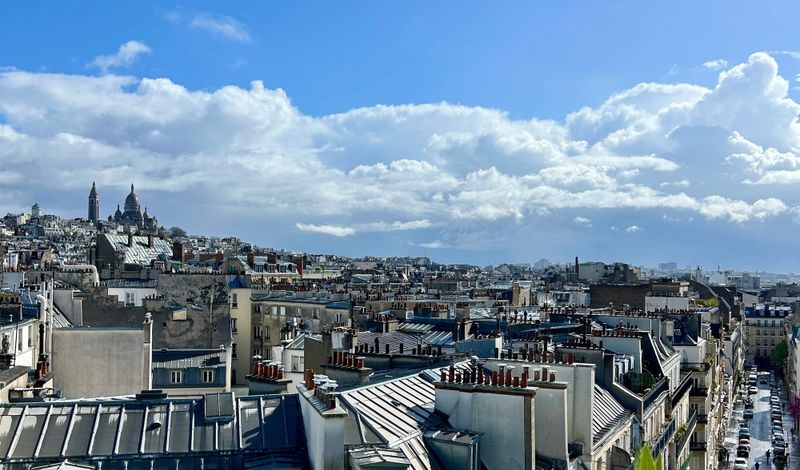
A few weeks ago, I took a spontaneous trip into Switzerland, partly to escape the heatwave that had France in a chokehold. I live just on the other side, in the French Alps, so — unfortunately for my wallet — it's the easiest country I can reach for a quick getaway, and Switzerland is not poor in mountain lakes, which makes for pretty ideal geography on days like that one. My destination was Ticino - the only canton in Switzerland that sits south of the Alps and, uncoincidentally, the only canton with Italian as the dominant language.
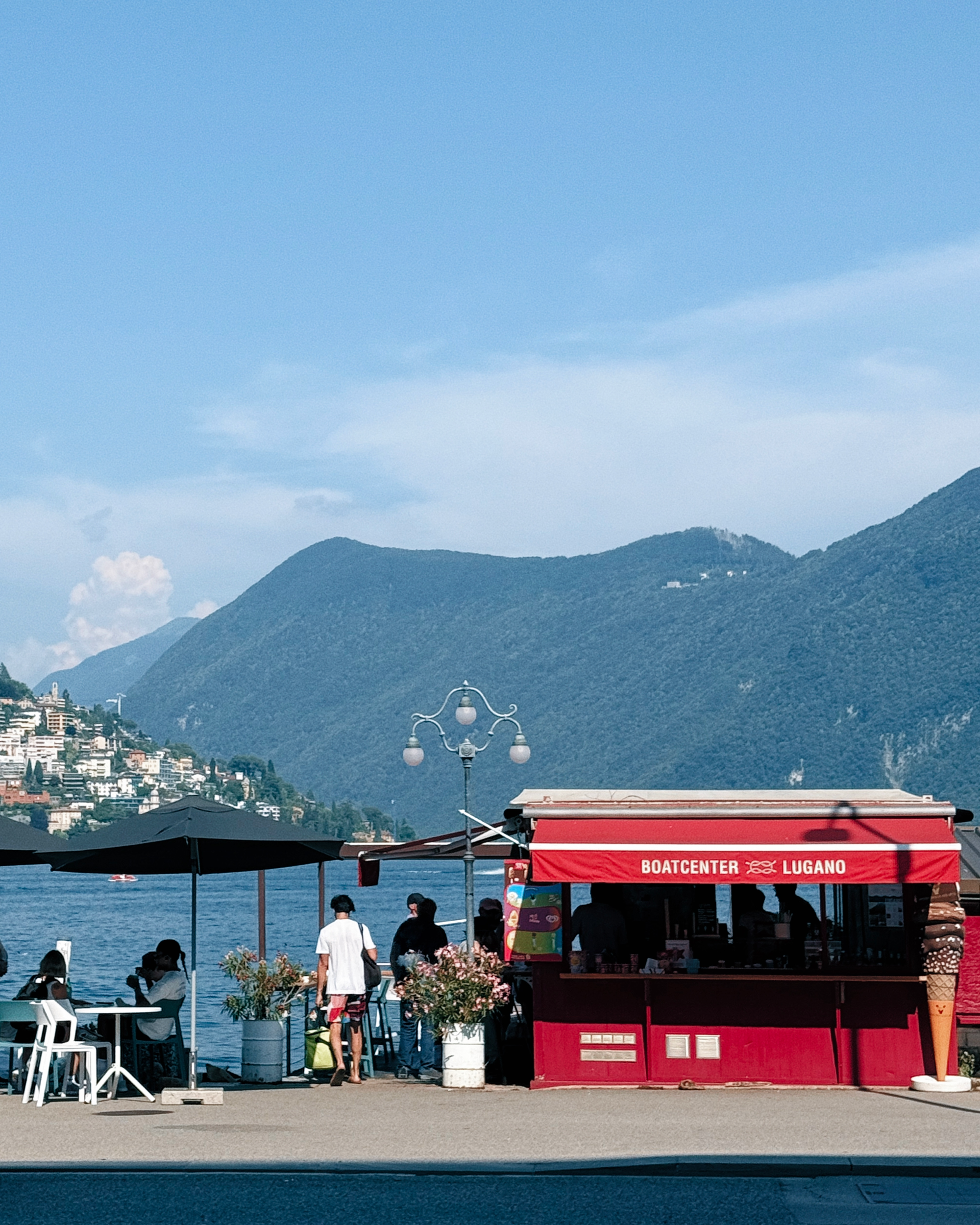
It wasn't until I was sitting lakeside at the Lido Riva Caccia in Lugano (this was during the first major heatwave of the summer, so proximity to a body of water was less vacation and more doctor's orders) that I found out what made this region's wine so unique. Or at least, unique compared to everything I thought I knew about Swiss wine up to that point. This was a region not built on the more obscure, indigenous varieties that are so quintessential to this country and so frustratingly difficult to find outside of it, but on a variety everybody already knows. Merlot.
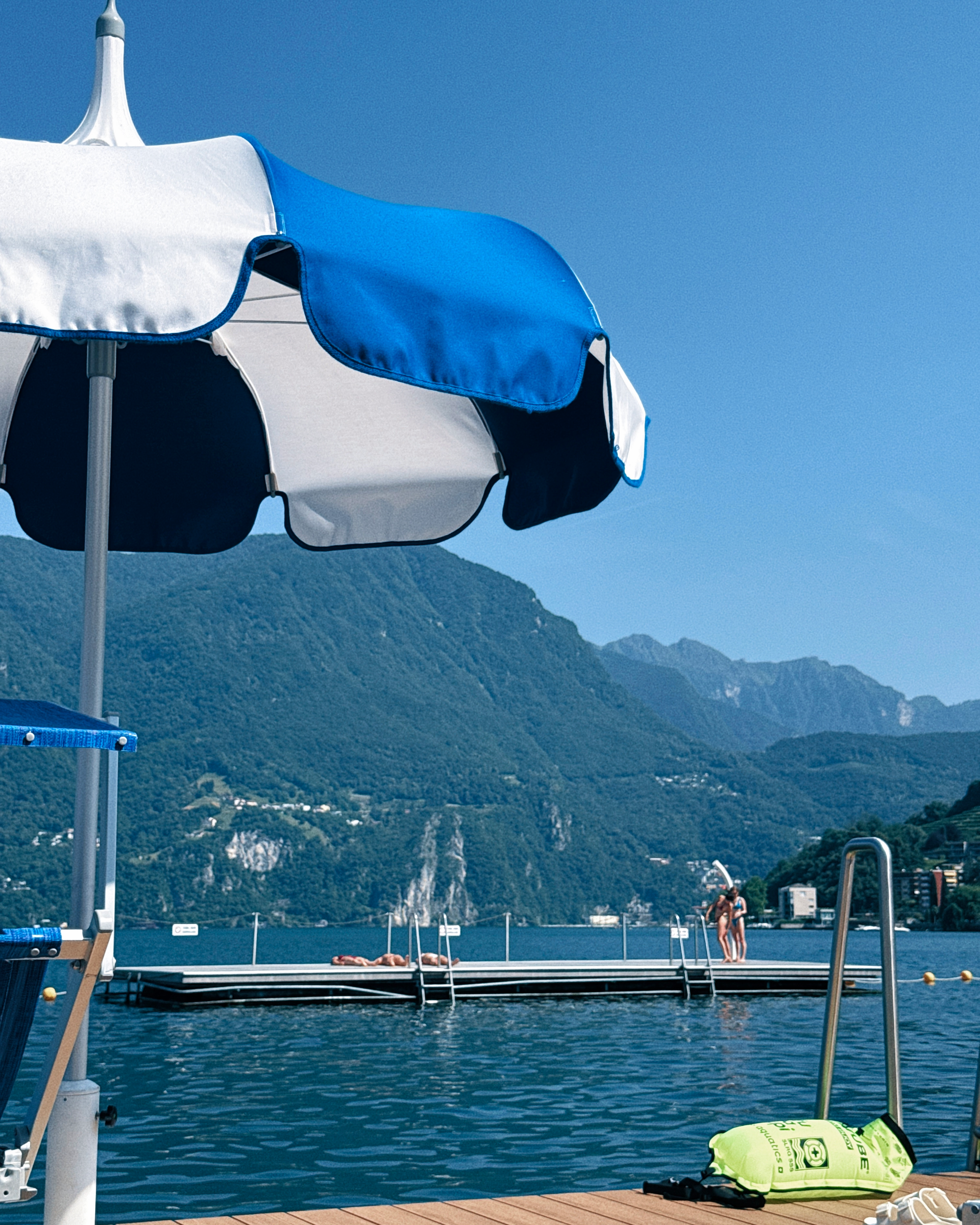
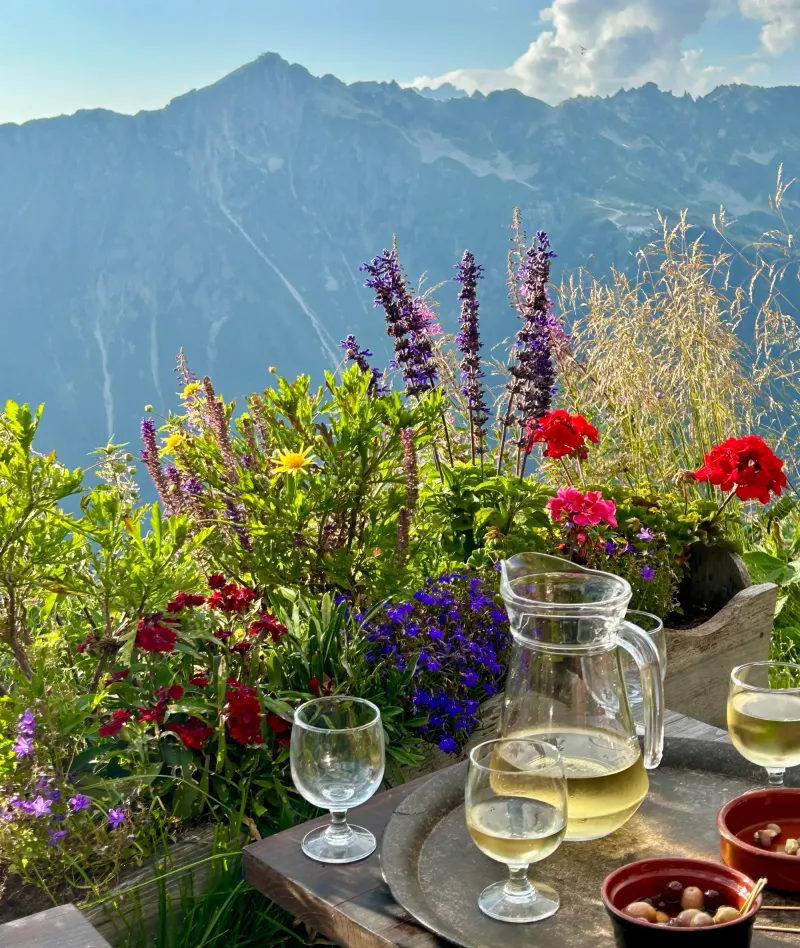
It was apertivo hour, which also coincides with the hottest part of the day, so a cold glass of white was absolutely in order. My one option? A white merlot.
It came out pale, dry, more floral than fruity – a white wine made from red Merlot grapes, pressed off their skins almost immediately so no color transfers. Apparently Merlot Bianco was introduced in 1986 and is now a fixture of the Ticino social hour, built for exactly the kind of slow, lakeside evening I was easing into. It was delicious and at the same time … utterly confusing. I found myself asking - can white Merlot be a serious wine?
The History of Ticino
Later, walking to dinner at Bottegone del Vino, I cut through the Piazza della Riforma — terraces spilling out in every direction, half the town crowded around outdoor screens for a World Cup match. Nothing about the scene — the polenta and risotto coming out of the kitchens, the rhythmic flow of Italian, the easygoing atmosphere — told me I was still in Switzerland. Except maybe the fact that my train that morning had left, and would leave again, exactly on time. (Sorry, Trenitalia, but I still remember that multi-hour delay in Bologna.)
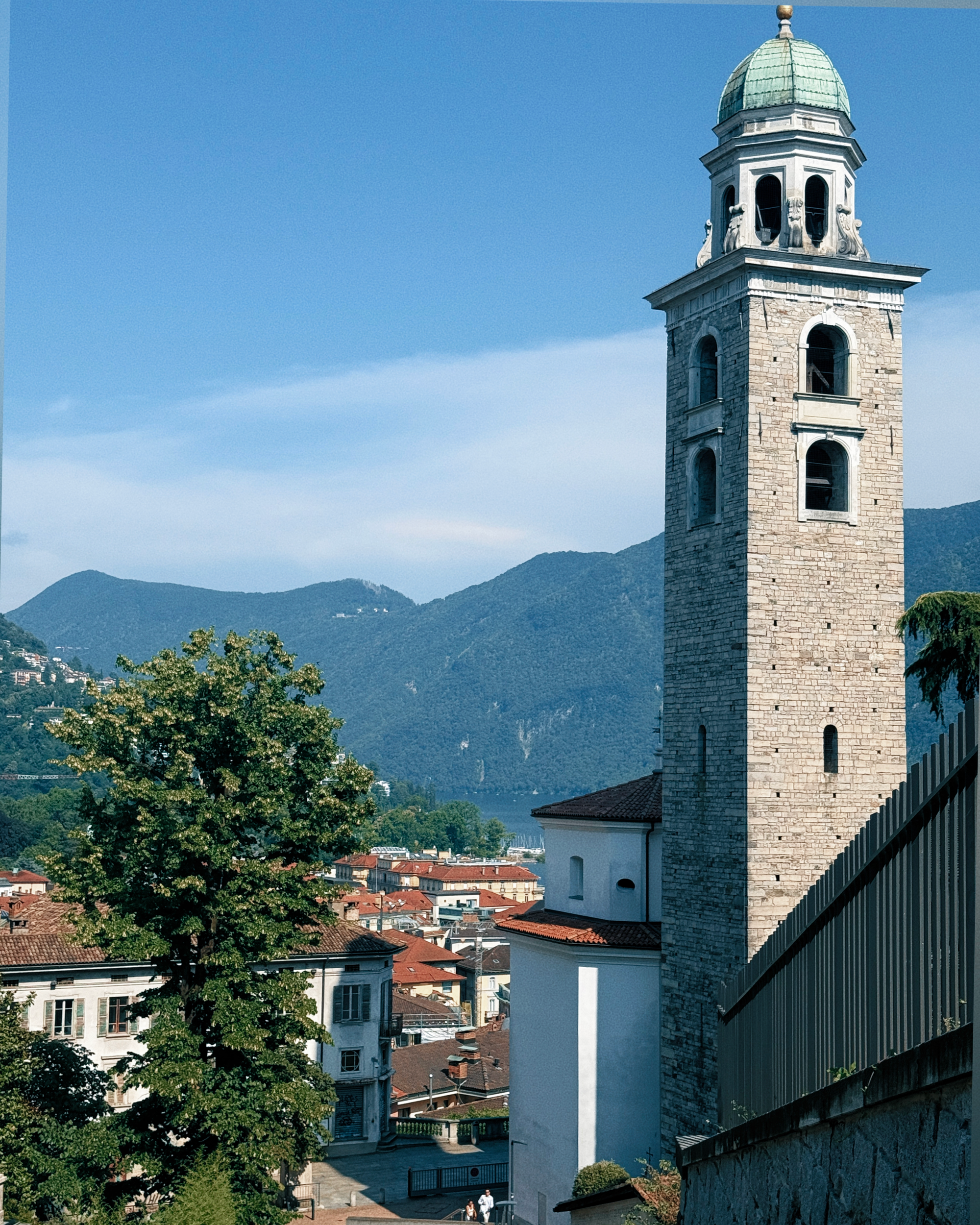
But that's Ticino: the only canton that sits entirely south of the Alps, and the only one where Italian is the sole official language — two facts that aren't really separate from each other. The mountains cut this place off from the rest of Switzerland long enough that it built its identity in orbit around Lombardy instead, with Milan just 63 kilometers south. You can feel Switzerland's cantons shift like this as you move through them. Geneva, where I'd started, is French. Luzern is unmistakably German. Then you land in Lugano, on its own lake, ringed by hills that could pass for Lombardy because, well, they practically are.
Ticino was actually a part of Italy for a long stretch – the Duchy of Milan, specifically. By 1512, the territory was claimed by the Swiss Confederation, but that didn't stop Napoleon from taking a crack at reversing it. In 1798, soldiers from the Italian republic he'd propped up next door tried to retake this same piazza – then called Piazza Grande – and fold Lugano back into Italy. A local militia ran them off by morning, and the town raised a liberty tree that night, echoing a phrase that had begun to take hold of the region: liberi e svizzeri. Free, and Swiss.
There was another key turning point in Ticino's history - one which I'd already encountered without realizing: the Gotthard tunnel. Before the Gotthard rail line opened in 1882, getting into Ticino from the rest of Switzerland meant crossing the Alps - no easy feat. Once the tunnel connected it to the north, Lugano's population nearly doubled between 1880 and 1910. The canton stopped being a remote, forgotten pocket south of the Alps and started being a place people could actually get to, settle down in, shape. That mattered quite a bit - for tourism, for trade and - as it turns out - for wine.
Cantina Monti at Bottegone del Vino
By the time I sat down at Bottegone del Vino, I began to understand why Lugano felt beyond categorization, an amalgamation of cultures. Within this context, the idea of Merlot defining wine culture here wasn't completely outside the realm of possibility.
Merlot arrived in the early 20th century, after phylloxera wiped out the canton's original vineyards, and took to the climate immediately. Warm Mediterranean air moves up from Lake Maggiore and Lake Lugano and settles against these mountains. The lakes are big enough to hold off frost and stretch the growing season two to three weeks longer than the rest of the country, and Ticino gets 2,200 hours of sunshine a year — the sunniest spot in Switzerland. (My sunburn can attest.) Grapes, unsurprisingly, love it here. Merlot del Ticino DOC now covers the region's Merlot-dominant reds, and the grape has become close to synonymous with Ticino wine — the way Pinot Noir is with Burgundy, or Nebbiolo with Piemonte.
But as Bottegone's massive wine list would prove, there's an equal emphasis on Merlot Bianco - a style of wine I've come to realize as a bit of a rarity in the wine world. And they're not all created equal – the soils throughout Ticino goes from more acidic in the north to chalkier in the south, resulting in quite a distinctive range of aromatic & textural profiles.
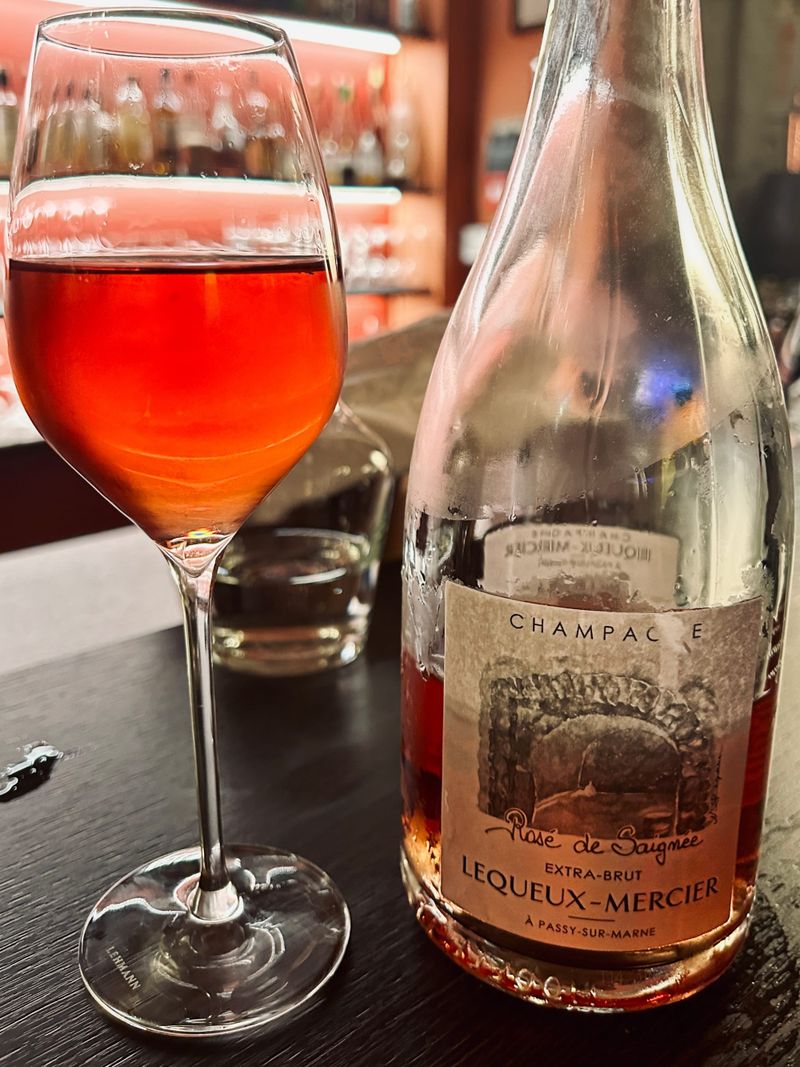
The bottle I decided on that evening (yes, a bottle - it's for research) was a red blend from Cantina Monti, a small family estate on the Ronchi di Cademario — the steep slopes running down toward the commune of Bioggio at 550 meters, slopes that are to steep to mechanize. Sergio Monti founded the estate in 1976 and now his son Ivo now runs it, working the same terraced rows by the same rules: no pumps, no filtration on the reds, everything moved by gravity.
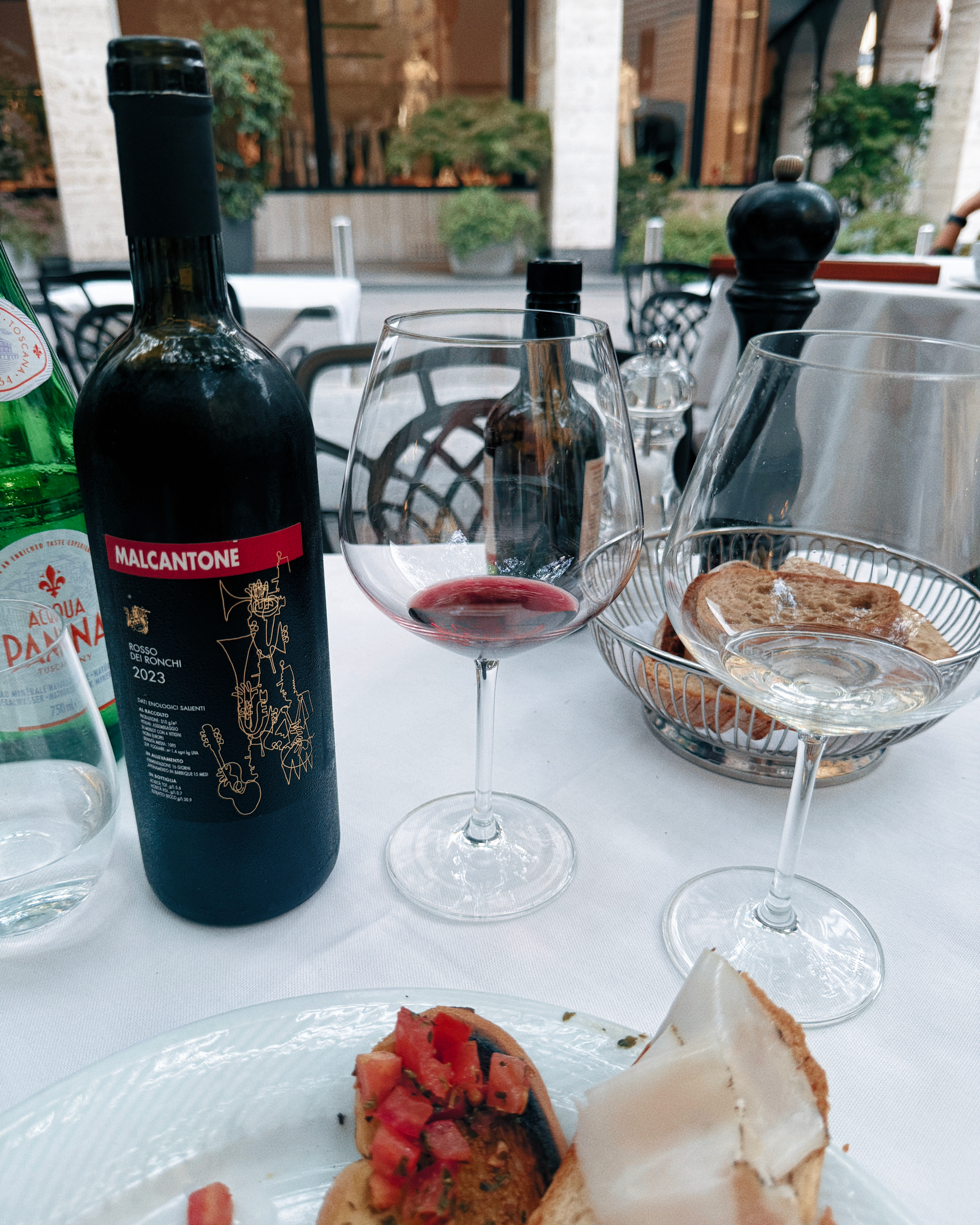
The Ronchi di Cademario was - and at this point I'm not surprised – also a blend that defied categorization. 80% Merlot blended with a small amount of Cabernet Franc, Carminoir and Diolinoir (two Swiss varieties), and Ancellotta (an Italian variety - best known for its role in Lambrusco). Aged in barrel & unfiltered – it's an elegant, deep wine (probably not an ideal pairing for the heatwave but here we are) and outrageously delicious. Their white, a blend of Müller-Thurgau, Chardonnay and Pinot Gris – yes, not everything is Merlot – is the other bottle worth asking for at the cellar door.
The Trouble With Chasing Obscurity
I'll admit - I went into this trip fully expecting some rare grapes nobody had heard of, a hidden gem no one's exploited for content yet. If you'd asked me to name the grapes that define Swiss wine, I probably would have named the Alpine varieties that rarely cross the border. Grapes like Petite Arvine, that produce probably my favorite white wines on the planet. Trust me, I love a weird, indigenous grape that I can't pronounce.
But I can't help but think that can sometimes be a little ... pretentious?
I wonder whether our borderline dogmatic deference to all things hyper-obscure blinds us to other fascinating wines and stories, just because they're associated with "boring" grapes.
Somewhere along the way, I feel like we started treating obscurity as a proxy for interesting, like only the unheard-of grape is worth writing about.
If I'd stuck with that, I'd have skipped right past this weird little corner of Italian Switzerland making world-class reds and whites out of Merlot – a grape that's about as mainstream as it gets.
Obscurity was never the same thing as good. I just needed a white Merlot on a hot afternoon to remind me of that.