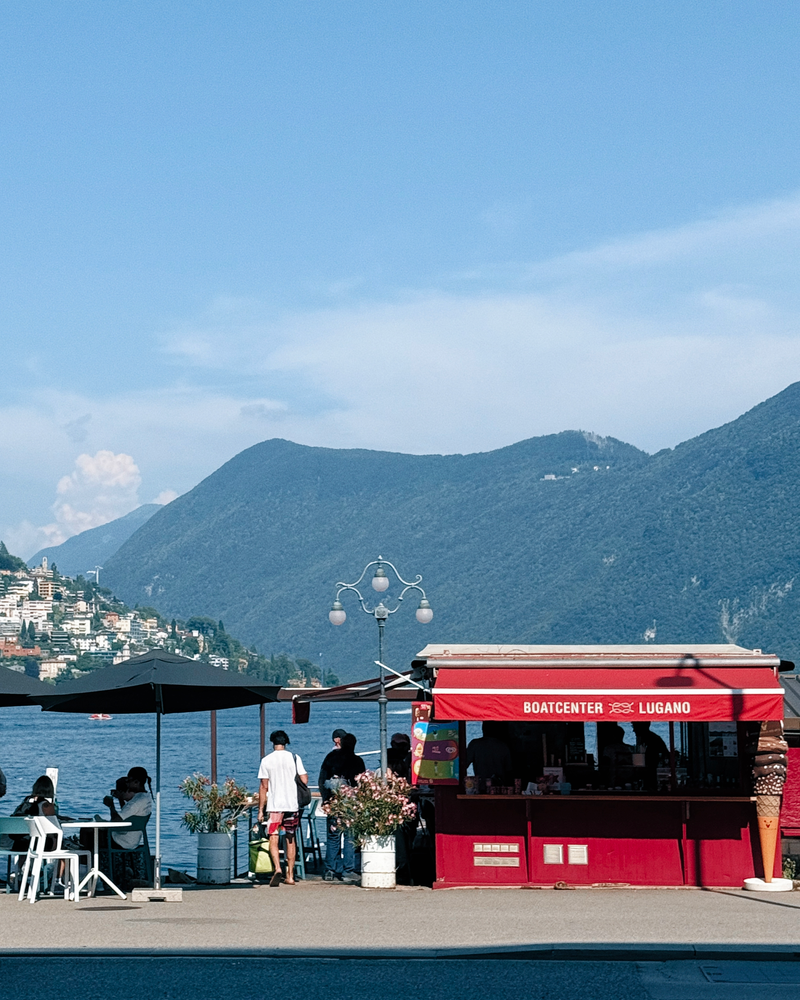
As summer travel heats up, so does the urge to get out of the heat. More travelers are skipping the crowded beaches of the Côte d'Azur and heading north, where they find alpine towns with a slower pace, clean air, and cold pools tucked at the foot of staggering peaks. A recent piece in The Times went as far as calling the Alps its writer's all-time favorite summer holiday. Regions like Alto Adige, Savoie, and the Swiss Valais are becoming the go-to for people who want both fresh air and good wine – and not necessarily in that order.
Mountain wines make perfect sense in this kind of setting. Grown at high elevations with drastic swings between daytime sun and chilly nights, these wines tend to be bright and taut, with the kind of acidity you only get from cold nights. Whites like Jacquère, Altesse, Erbaluce, and Petite Arvine show off clarity and texture – often with a cool mineral core or a subtle herbal lift. The reds, like Schiava, Mondeuse, and even the occasional Gamay or Cornalin, are light and structured with more personality than power. These are wines made for movement – for lunch after a hike, or dinner with friends when you want something that tastes like where you are. And that's kind of the point of drinking wine, right?
They also work year-round. I reach for them just as often in fall and winter as I do in July. There are alpine whites with more texture and weight that stand up to roasted root veggies or cheese-heavy meals (looking at you, fondue and rösti), and earthy, savory reds that feel built for cold-weather dishes. For example, in the cold, slightly depressive depths of this past January, I picked up a bottle of Altesse from Domaine Dupraz at a small neighborhood wine shop. It was affordable and everything I needed it to be – textural and a bit rustic. Delicious.
There's also something refreshingly unfussy about mountain wines. They're not made to be extravagant, just precise. A kind of honest, place-first approach that runs through the whole range. You see that in producers like Domaine Belluard, who brought global attention to Savoie's Gringet grape, or Domaine des Ardoisières, whose steep, slate vineyards produce vivid wines that taste like they were wrung out of the rock itself. In the Valais in Switzerland, Valentina Andrei is worth seeking out – she works with native grapes and farms organically. These are people farming difficult terrain with intention, and the wines taste like it. There's a confidence to keeping things simple, and the trust that what's grown on steep, stony slopes has something worth saying.
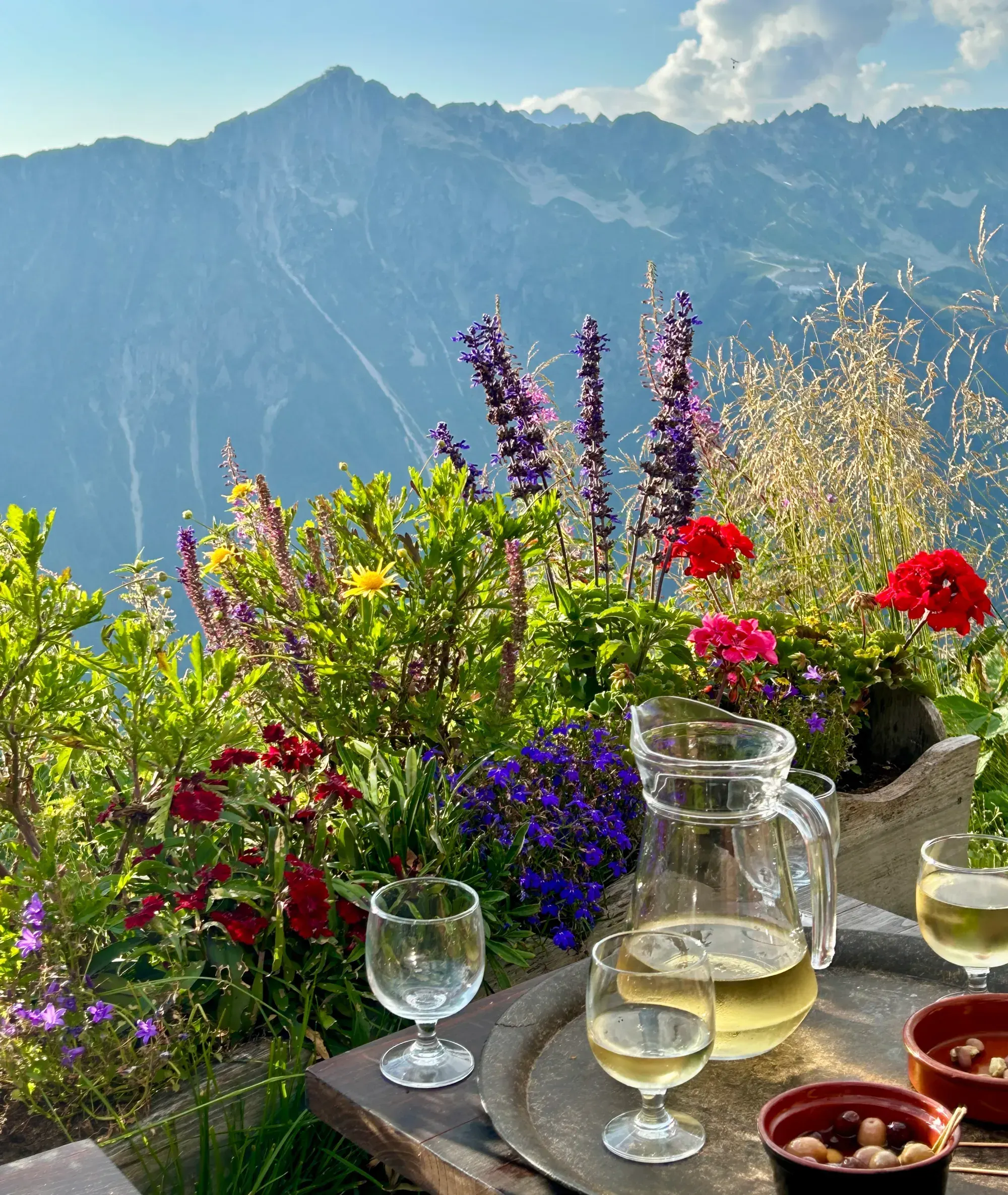
But to be honest, sometimes the best bottle isn't one with a name at all. It's the more affordable local white poured at the auberge or refugio you've hiked to – served in a carafe, with zero pretension. It probably came from just down the valley. In that moment, when you're exhausted from a day's trek – but surrounded by alpine flowers and mountain peaks – it might as well be Grand Cru. The context makes these wines. That's part of the beauty of drinking up high.

Maybe that’s why these wines feel so ... right for right now. The world is messy and complicated, and our current timeline is pretty difficult to make sense of at times. Alpine wines, for the most part, feel excluded from that. There’s a humility to them, and to the people who make them. Maybe it’s the precarity of the Alps themselves, with rapidly melting glaciers and record-breaking summer heatwaves, there's a real sense that this landscape is changing fast. These wines carry that uncertainty.
As the heat bears down on us this summer and our quiet or not-so-quiet desperation for something cold and refreshing is in full swing, try grabbing something with a little altitude. And trust me, keep drinking it even when the snow starts to fall.